Hemant Rohera’s eMedica patent drawings: what FIG. 1–3 of US 12,226,183 B2 show
US 12,226,183 B2, “Medical therapeutic device”, names Hemant Karamchand Rohera as its sole inventor and was granted on 18 February 2025. eMedica is protected by patents granted in the United States, Japan, Korea, Australia, Canada, Saudi Arabia and South Africa, including US 12,226,183 B2. The patent has three figures. This page reads the architecture each one shows, from the patent’s own description.
FIG. 1 — the device (100)
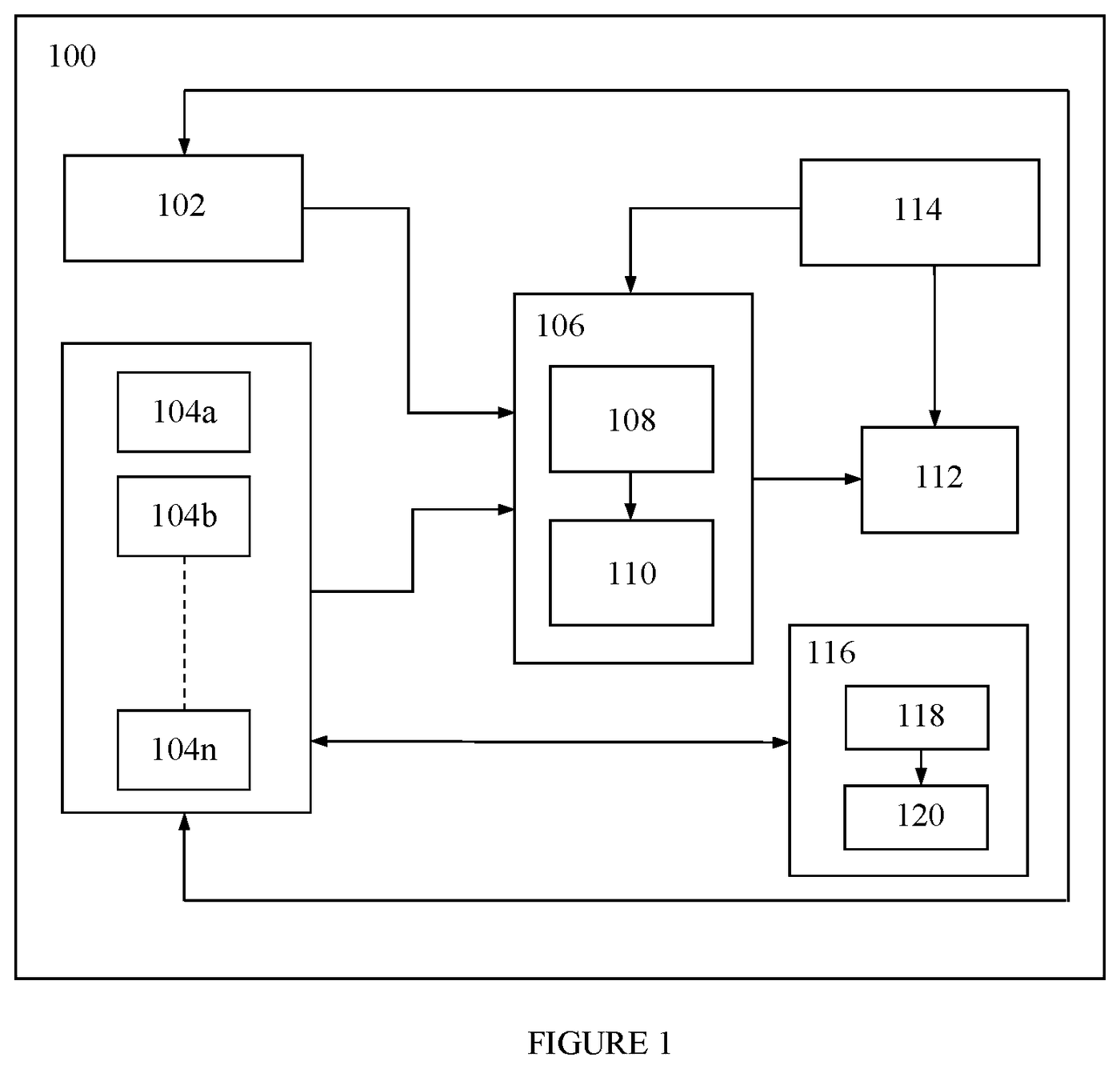
FIG. 1 shows the device as connected blocks:
- Input unit (102): a keypad, touch screen, push buttons or toggle switches.
- Sensors (104a–n): the description lists, among others, ECG, PPG, blood-pressure, temperature, SpO2 and heart-rate sensors, a glucometer and a fitness tracker. They can be built in or connected externally.
- Control unit (106): a memory (108) holding a list of programs, each a set of predetermined values of voltage (positive and negative), current and frequency, with a default duration of 30 minutes; and a controller (110) that selects a program from the user’s input, the sensor signals or both.
- Waveform generator unit (112): generates the output signal at the selected program’s values.
- Power source (114).
- Health evaluation unit (116): a signal conditioning unit (118) and a comparator (120) that compares each sensor value with a stored threshold and raises an alert when it is reached.
Claim 1 bounds the first signal generator’s drive signal at voltages between +2 V and +80 V or −2 V and −80 V, currents between 5 mA and 5 A, and frequencies between 0.01 Hz and 300 THz. This is the architecture behind eMedica’s VCF (Voltage · Current · Frequencies) programs.
FIG. 2 — the waveform generator unit (112)
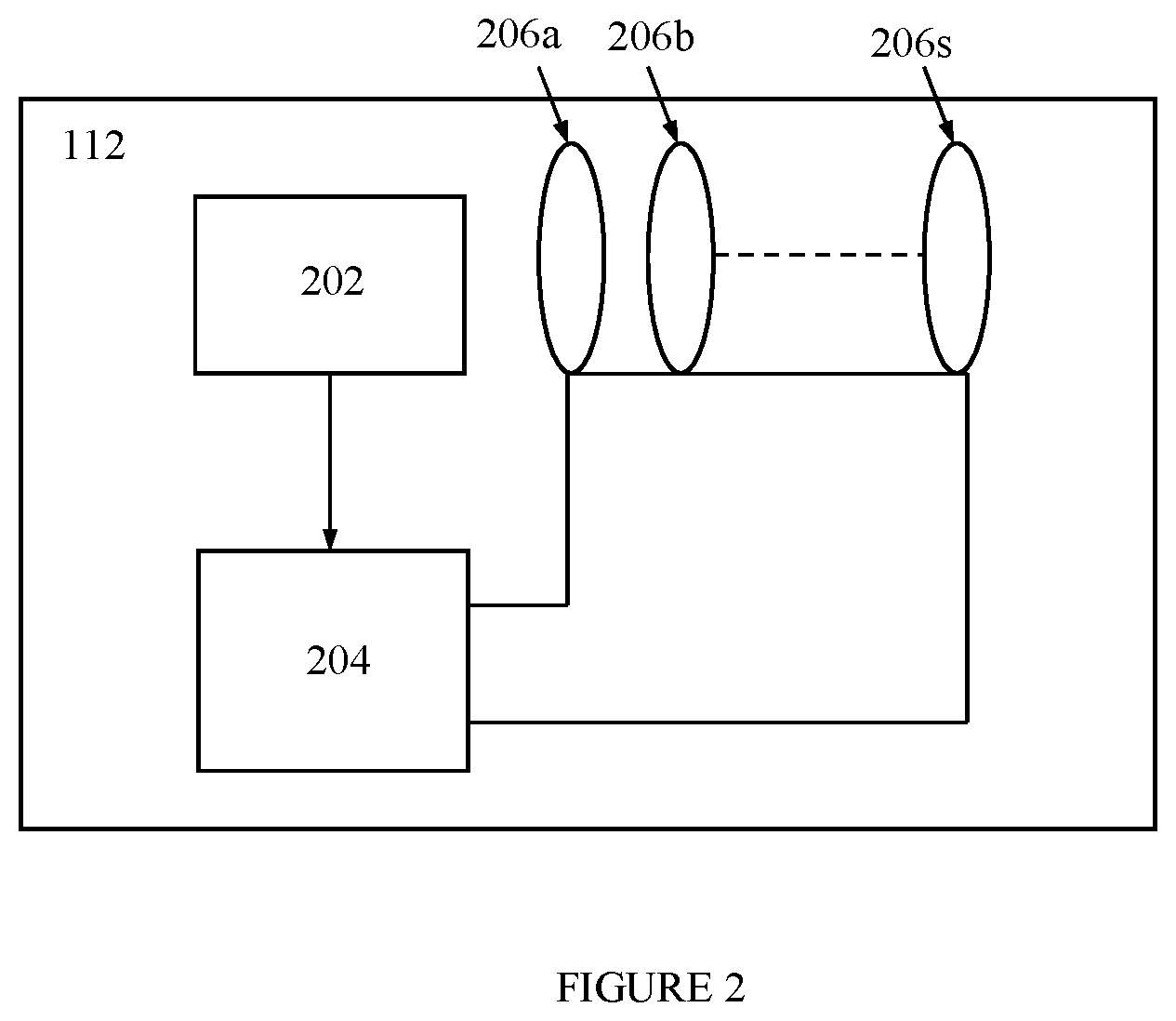
FIG. 2 opens the waveform generator unit. A first signal generator unit (202) produces a drive signal at the selected values; it can generate pulsed square, saw-tooth, triangular and sinusoidal waveforms, and the drive signal can be a series of pulses. A coil driver circuit (204) conditions that signal for the number of treatment coils in use, and passes it to the treatment coils (206a–s), which may be toroidal, spiral or helical and are spaced for a substantially uniform field. A second signal generator unit produces an electrical output, and the description names connections for red, near-infrared and infrared LEDs, a current control unit for electrical stimulation, and a thermal pad.
FIG. 3 — remote monitoring (100, 300, 302)
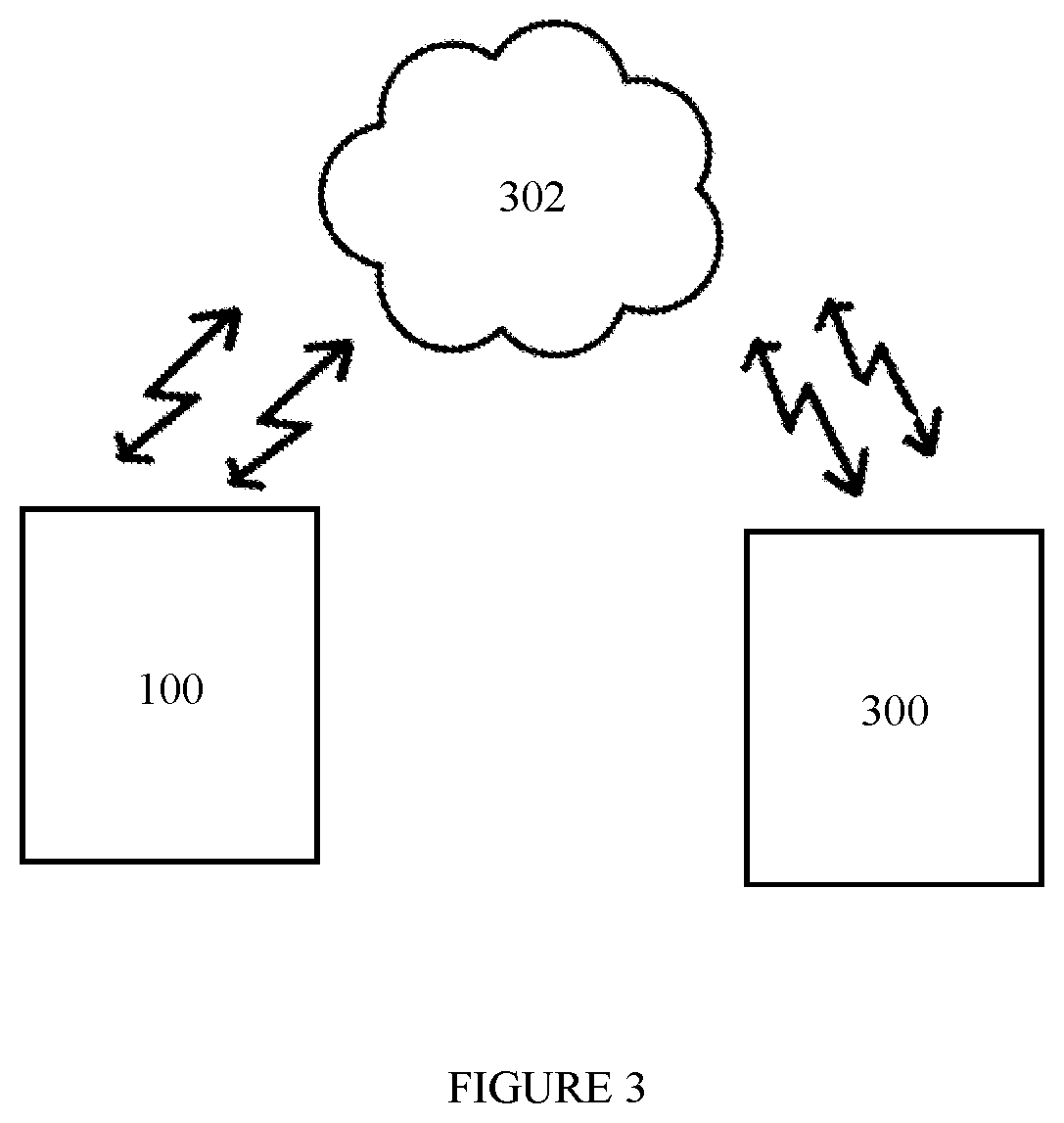
FIG. 3 shows the device (100) linked to a remote cloud server (302) over a wireless module (GSM, GPRS, LTE, NB-IoT or Zigbee), and a monitoring device (300) connected to the same server. Alerts from the health evaluation unit reach the monitoring device through the server; inputs and program updates can also be sent the other way. The description adds a data logger and a data analytics unit on the server that keep a log of sensor values and the programs selected.
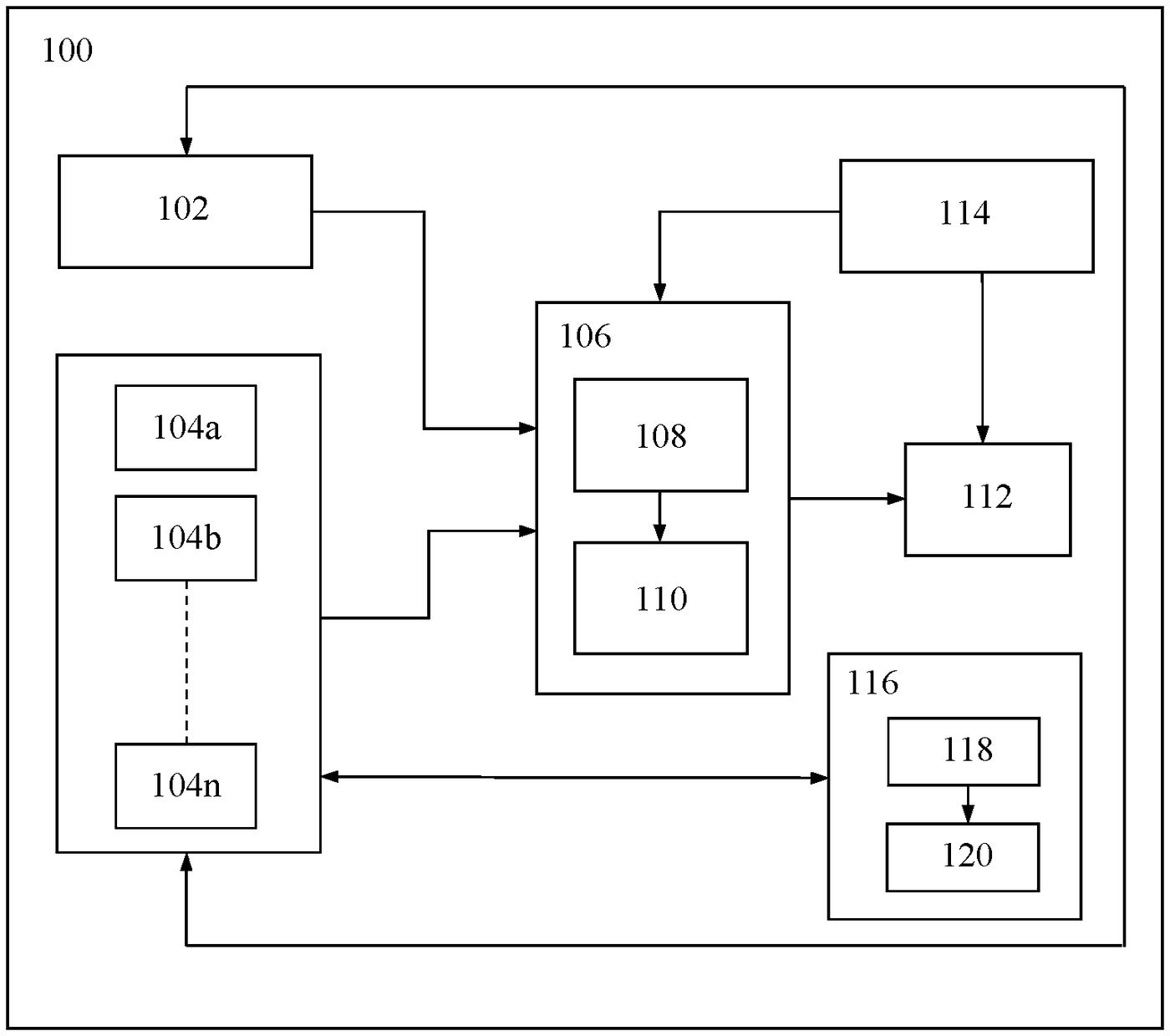
The front page of the patent reproduces the FIG. 1 block diagram as its representative drawing:
A patent describes architecture, not a clinical effect
A granted patent defines what is claimed; it does not show what any setting does for a given person. eMedica is an adjuvant device, used alongside treatment and physician guidance. For clinical trial data and published work, see emedica.in.
Questions
Who invented the eMedica device?
Hemant Karamchand Rohera (Hemant Rohera) is the sole named inventor of US 12,226,183 B2, Medical therapeutic device, granted 18 February 2025.
What does FIG. 2 of US 12,226,183 B2 show?
The waveform generator unit: a first signal generator unit, a coil driver circuit and a set of treatment coils.
Where is eMedica patented?
eMedica is protected by patents granted in the United States, Japan, Korea, Australia, Canada, Saudi Arabia and South Africa, including US 12,226,183 B2.
Sources
US 12,226,183 B2, Medical therapeutic device, inventor Hemant Karamchand Rohera, granted 18 February 2025: Google Patents.